


The Product That Built the Brand is BeautyMatter’s ongoing series spotlighting the single hero products behind beauty’s biggest cult followings. Each installment sits down with the founder, CEO, or executive of a brand with a genuine following to unpack the origin, formulation, and business strategy behind the one product (or product family) that defined it commercially and culturally.
Dr. Dennis Gross and Carrie Gross didn’t set out to build a skincare brand, but rather to find one that worked. “So much of the market was centered around traditional moisturizers and hydration,” Carrie Gross said to BeautyMatter, “and I was looking for products that did more.” When she met her future husband, dermatologist Dennis Gross, he introduced her to active ingredients, and she saw the gap immediately. “I told him, ‘Why don’t you create something, and I’ll start a brand?’ But I knew it had to be disruptive and rooted in active, efficacious skincare.”
Dr. Gross was already frustrated with what the market offered his own patients: aggressive glycolic peels sold to dermatologists by vendors chasing quick results. He formulated his own professional-strength version instead, and Carrie became, in her words, “completely addicted to the results.” The brand’s actual founding moment came from her impatience with the commute. “Bring the peel home to me. I can’t keep making appointments to see you,” she recalled telling Dr. Gross. That request became the Alpha Beta Daily Peel’s entire premise of professional-grade products, packaged for a bathroom counter.
Twenty-five years later, that instinct has become one of skincare’s most defining franchises. According to Circana, the Alpha Beta Daily Peel is the #1 at-home peel and, per the brand’s own tracking, one unit is sold every two seconds worldwide. It now spans three formulations—Original, Extra Strength, and Ultra Gentle—built around a patented two-step delivery system that Gross designed specifically to avoid the downtime associated with professional acid peels. In 2023, Shiseido acquired DDG Skincare Holdings for a reported $450 million, folding the brand into a prestige portfolio that includes Shiseido and Clé de Peau Beauté, a deal Gross said has changed nothing about the formula or his role as chief science officer.
For BeautyMatter’s second installment of The Product That Built the Brand, we spoke with Dr. Gross and Carrie Gross about the clinical insight that separated his peel from the “lunchtime peel” trend of the early 2000s, why he still insists the peel is a treatment rather than a product, and how a category built on acids sits inside a global chemical peel market that Fortune Business Insights currently values at $2.46 billion, projected to reach $3.84 billion by 2034 at a 5.69% CAGR.
Dr. Gross trained as a dermatologist performing professional acid peels, a category with a 50- to 80-year history that, in his account, had never questioned its own central assumption that results required downtime. “The peels that were done by doctors always had a downtime on the patient,” he said. “The client always had to experience redness and injury to the skin, and that was what I was taught.” Even the “lunchtime peel” movement of his early career, built around single-acid glycolic treatments, still sent patients home for three to five days of recovery.
Dr. Gross rejected the premise outright. “There’s no organ in the body that you injure to make it come back better,” he said. “Athletes never injure their lungs to increase their lung capacity,” he compared. “There’s no such thing as injury really causing an improvement.” The conviction that results and downtime were not, in fact, linked, became the founding thesis of the Alpha Beta Peel, an at-home acid treatment designed to be used daily, with no injury and no recovery period.
The mechanism came down to a detail Dr. Gross said the entire professional peel industry had overlooked: every dermatologist-administered peel used two steps, but no one had translated that structure to the at-home product. “How is it possible that the world was missing the idea that the consumer at home should also do two steps?” he questioned. “It was a blatant misunderstanding.” Step one applies a blend of acids; two minutes later, step two applies a neutralizer, cutting off the acids’ activity before it can cause irritation. “Acids are good,” Dr. Gross said, “but for a limited time only on the skin. Two minutes is the secret to getting the best of the treatment, having no downtime, and having no injury.”
Dr. Gross’s second departure from convention was concentration. Where the category standard was a single acid—glycolic—at high strength, he found that a blend of five acids at low concentrations outperformed it. “The skin responds better not to just one acid, but to a blend of acids,” he said, hence the name Alpha Beta, combining alpha hydroxy acids (glycolic, lactic, malic, citric, mandelic) with the beta hydroxy acid salicylic acid. The original formulation used five acids; the Extra Strength version, developed roughly a decade later for consumers who had acclimated to the original, uses seven. The Ultra Gentle formulation is built around three milder acids for sensitive and dehydrated skin.
Step two’s job extends beyond neutralizing. Once the dead surface layer is removed, Dr. Gross explained, the fresher cells beneath are unusually receptive to active ingredients. “Their response to other ingredients is on steroids.” That’s the rationale for loading step two with antioxidants, vitamins, and barrier-supporting ingredients, a design that makes the second pad functionally anti-aging, not just a stop-switch.
Dr. Gross is dismissive of formulas that chase higher acid percentages as a proxy for efficacy. “The consumer sadly has this impression that they’re getting more for their money [with] the [high] percentage of things, which is absolutely not the case. The key, as a dermatologist, I have learned, is that you always must maintain the skin’s balance.”
That two-part engineering is also, per Carrie, the reason the product has resisted the dupe cycle that has hit much of skincare. “There actually have been attempts over the years, but what is hard to replicate is the science and formulation behind the two-step system,” she said. “We’ve seen other two-step products come and go, and more recently there are one-step products positioned as simpler alternatives. But a one-step exfoliating treatment is fundamentally different from what we created.” The distinction, in her framing, is that Step 1 and Step 2 are functionally interdependent rather than sequential add-ons. To date, that difficulty in copying the product still shows up in retention.
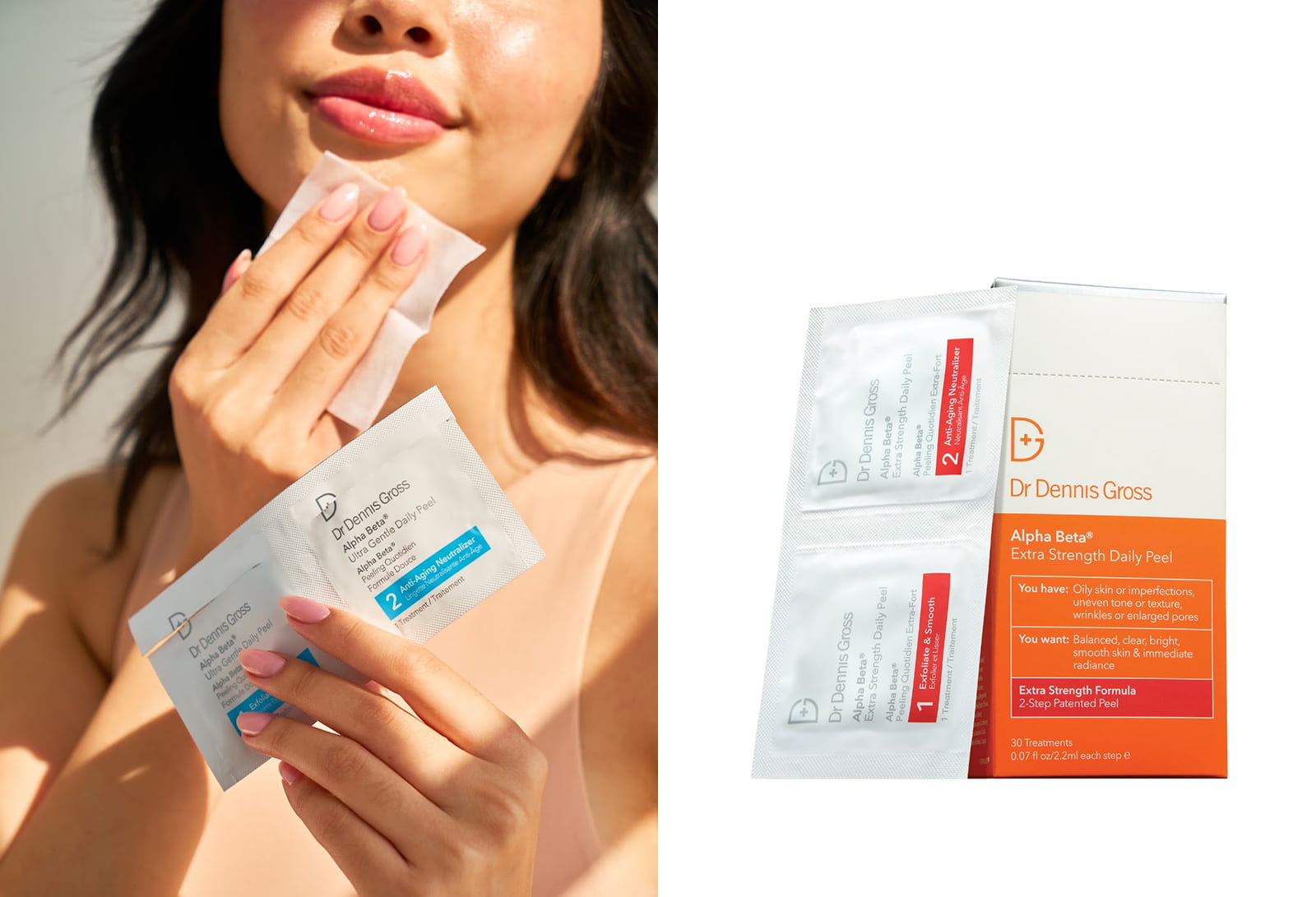
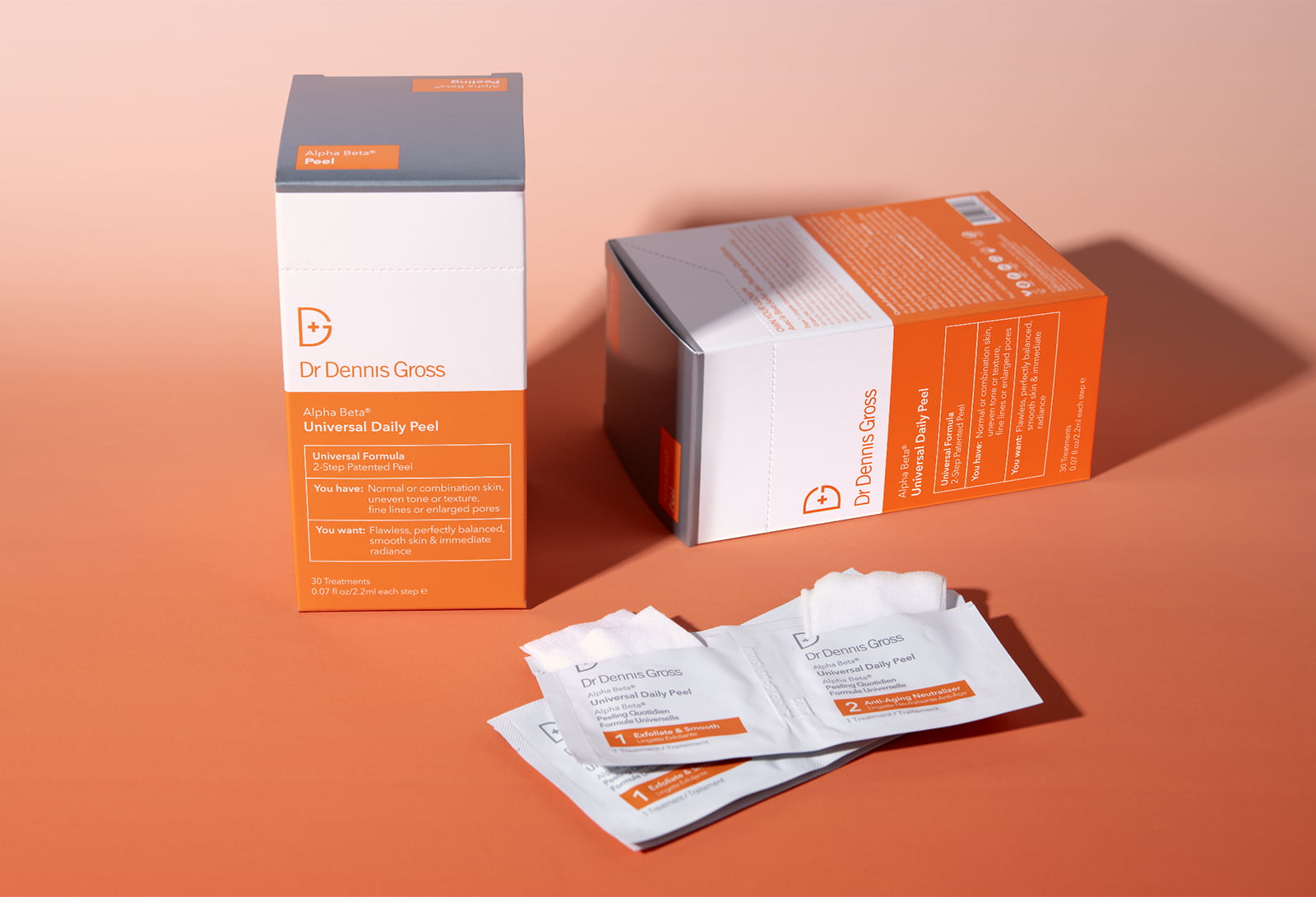
DDG’s retail footprint was built to mirror the brand’s origin story—a professional treatment that travels home. “Sephora has been a huge success for us, and we’re now in Sephora globally across all markets except China,” Carrie said. Nordstrom remains a core US partner; internationally, the brand sits with SpaceNK, Selfridges, Harvey Nichols, Harrods, and Cult Beauty in the UK, and Mecca in Australia (now the brand’s second-largest market by volume after the US). “What works so well about multi-brand retailers is that they give consumers an opportunity to discover us within their existing routines,” she says. “The Peel in particular has always been a gateway product.”
The professional channel runs in parallel. DDG’s treatments are used at resorts that include Canyon Ranch and Miraval and at day spas such as Silver Mirror, with a strong professional business in Sweden, Norway, and the Netherlands. The Ritz-Carlton partnership shows the model at its most deliberate: the price of the in-spa facial includes a 30-day supply of the at-home Peel. “When the box was empty, it was a natural reminder that it might be time for another facial,” said Carrie. “That connection between professional expertise and at-home efficacy has been part of our DNA from day one.”
Acquisition, meanwhile, runs on sampling rather than any single channel. “The Alpha Beta Daily Peel is inherently discoverable and shareable,” she revealed. “The five-treatment pack gives someone the opportunity to experience the product and see what it can do for their skin before committing to a larger box.” Around that sits a deliberately varied marketing mix that includes social and digital advertising, creator events, pop-ups, partnerships with makeup artists, and a presence at dermatology events like the American Academy of Dermatology’s annual meeting to stay close to the professional community. “There isn’t one single acquisition vehicle,” Carrie explained. “It’s about meeting consumers in different places and giving them an opportunity to experience the efficacy of the products for themselves.”
Dr. Gross drew a sharp line between the Alpha Beta Peel and typical skincare. “If it’s just one step, it’s nothing more than a strong exfoliator,” he said. What makes it a “treatment” rather than a product, in his framing, is the two-minute interval between steps, a process that changes the skin’s condition before the second formula is applied. “That transformation does change the skin’s baseline that then allows that second step to work on that newfound skin,” he said. “That journey is different than just applying something on your skin.”
That treatment positioning shaped where DDG chose to sell. The brand launched at Nordstrom, leaning on in-store beauty counters where consultants could demonstrate the two-step process directly, before Sephora introduced its open-sell format shortly thereafter. Dr. Gross’s own dermatology practice also supplied a parallel channel. Beauty editors treated as patients, for example, generated press before social media existed. “Seeing is believing,” he said. DDG also retained a professional-strength peel sold through spas and medical aesthetics clinics, a channel that continues to anchor the brand’s high-touch positioning at properties including the Waldorf Astoria, the Ritz-Carlton, and Miraval.
Asked what keeps customers loyal in an increasingly crowded exfoliant category, Dr. Gross pointed to consistency of result rather than novelty. “As long as human skin doesn’t change, how human skin responds to treatments won’t change,” he said. He’s equally direct about what he sees separating DDG from newer entrants formulated by other lab technicians or celebrity founders. “The number-one thing that we have never veered from is results. That’s our recognition, that’s our DNA.” Repeat purchase, in his telling, comes down to a single trial. “Once they try it one time, that’s the secret sauce. They become brand fans.”
The company was entirely self-funded in its early years. “We had to have the guts to be entrepreneurs,” Dr. Gross said, before taking venture capital in 2020 from Main Post Partners and, in 2024, selling to Shiseido. He remains chief science officer, and Carrie continues to run the company. “We are still both completely involved,” he said conclusively.